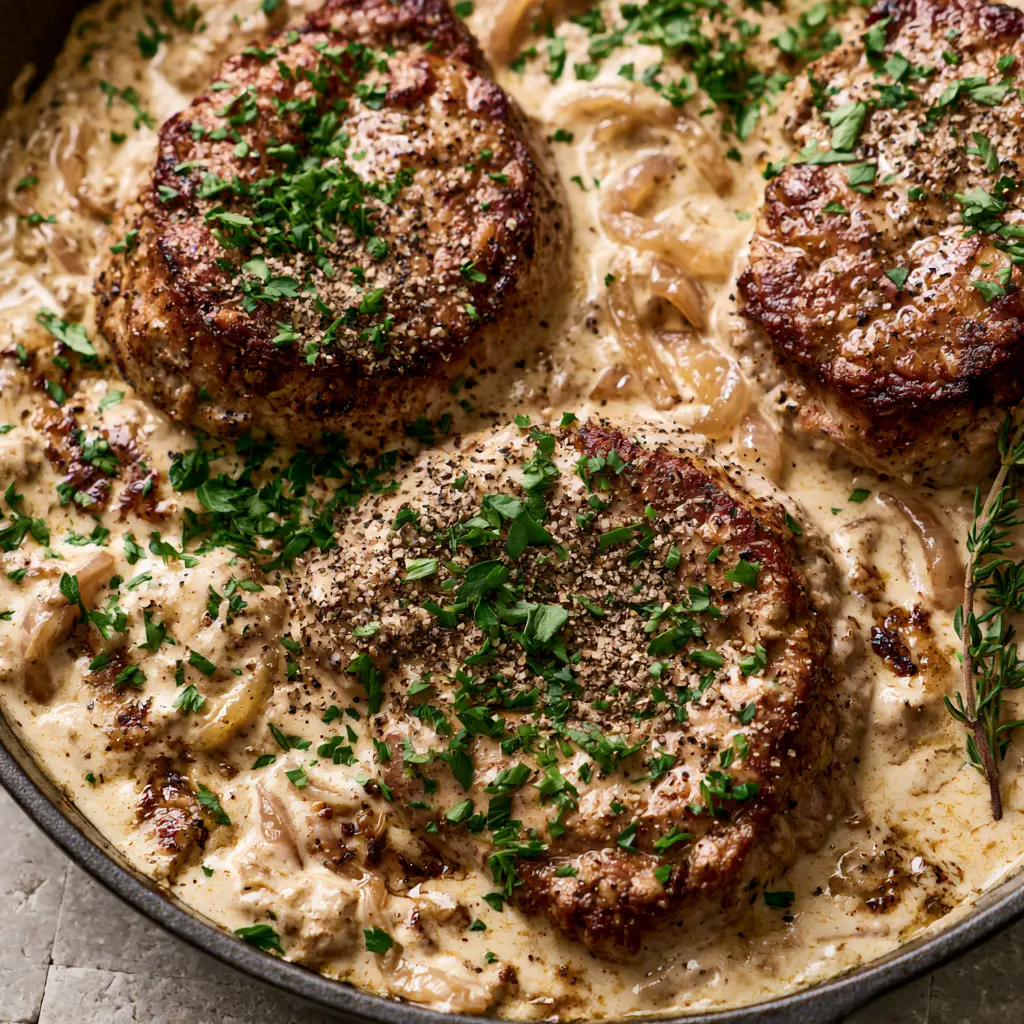
There is something inherently comforting about the sizzle of a cast iron skillet and the aroma of sweet onions softening in golden butter. These pork medallions with onion gravy represent the pinnacle of home-cooked elegance, combining a high-heat sear with a velvety, ivory-colored cream reduction. If you have been searching for a dinner that looks like it belongs in a professional food shoot but feels like a warm hug, this is the recipe for you.
Achieving the perfect pork medallions with onion gravy requires more than just a pan and heat; it requires an understanding of the Maillard reaction and the patience to let onions reach a translucent, jammy state. In this guide, we will break down the forensic details of creating a restaurant-grade crust on your pork while maintaining a juicy, glistening center. Every element, from the coarse-ground pepper to the fresh thyme sprigs, is designed to create a multi-sensory dining experience.
Whether you are hosting a weekend dinner party or simply want to elevate your Tuesday night routine, this dish delivers on every promise. The contrast between the deep, golden-brown crust of the pork and the soft, ivory sauce creates a visual masterpiece on the plate. Let’s dive into the science and soul of this incredible skillet meal.
What Makes These Seared Medallions and Creamy Gravy So Special?
- The Perfect Crust: We utilize a high-smoke-point oil and a heavy cast iron surface to ensure a crusty, golden-brown exterior that locks in the juices.
- Velvety Texture: The gravy is a true heavy cream reduction, naturally thickened by the proteins in the pan and the sugars of the caramelized onions.
- Symphonic Aromatics: The combination of fresh thyme and a heavy dusting of coarse black pepper provides a woody, spicy backbone to the rich cream.
- Visual Precision: This dish is finished with a vibrant scatter of minced Italian parsley, providing a bright green pop against the warm neutral tones of the sauce.
The Essential Components for Restaurant-Quality Pork
To achieve the specific visual and flavor profile described in our blueprint, every ingredient serves a dual purpose. We aren’t just looking for flavor; we are looking for the structural integrity of the sauce and the precise color of the sear.
Pork Tenderloin: This lean, tender muscle is the star. When sliced into 1.5-inch (3.8cm) medallions, it cooks quickly while remaining incredibly succulent. If you enjoy this cut, you might also want to explore our guide on pork loin variations for future meals.
Yellow Onions: We use yellow onions for their high sugar content, which allows them to transform into those soft, translucent slivers that define the gravy. They provide the foundational sweetness that balances the savory pork drippings.
Heavy Cream: This is the secret to the “ivory” color mentioned in the visual prompt. Unlike a flour-based gravy, a cream reduction offers a richer mouthfeel and a glistening finish that coats the back of a spoon perfectly.
Fresh Thyme and Parsley: Thyme is infused during the reduction process, while minced Italian parsley is added at the very end to maintain its bright green color and fresh, peppery bite. For those who love herb-forward pork, our lemon and herb pork piccata is another excellent choice.
Coarse Cracked Black Pepper: Do not use fine-ground pepper here. The large, visible shards of cracked pepper provide a specific textural element and a sharp heat that cuts through the richness of the heavy cream.
Golden Pan Drippings (Fond): This is the “liquid gold” left in the pan after searing. It contains all the concentrated pork flavor and provides the browned bits that fleck the ivory sauce.
The Culinary Toolkit: Equipment for a Perfect Sear
To replicate the visual result of a thick-cut pork tenderloin in a matte charcoal cast iron skillet, you need the right tools. A heavy-bottomed skillet is non-negotiable for heat retention.
12-Inch Cast Iron Skillet: The cast iron provides an even, intense heat that is necessary for that crusty edge. It also creates a beautiful contrast for serving, as seen in our high-angle close-up photos.
Sharp Chef’s Knife: Essential for cutting the pork tenderloin into uniform medallions and creating those paper-thin, translucent onion slivers.
Stainless Steel Tongs: These allow you to flip the pork without piercing the meat, ensuring the juices stay exactly where they belong—inside the medallion.
Wire Whisk: Necessary for emulsifying the heavy cream into the pan drippings to create a smooth, velvety sauce without any separation.
Mastering the Sear and the Sauce: Step-by-Step
Phase 1: Preparing the Pork for Greatness
Begin by patting your 1.5 lbs (680g) of pork tenderloin dry with paper towels. Moisture is the enemy of a good sear; if the meat is damp, it will steam rather than crust. Slice the pork into 1.5-inch (3.8cm) thick medallions.
Season both sides generously with kosher salt and a heavy dusting of coarse cracked black pepper. Press the seasoning into the meat so it adheres during the high-heat transition. Let the meat sit at room temperature for about 10 minutes to ensure even cooking.
Phase 2: The High-Heat Skillet Sear
Place your cast iron skillet over medium-high heat and add 2 tbsp (30ml) of high-smoke-point oil (like avocado or grapeseed). Once the oil is shimmering and just starting to whisps of smoke, carefully place the medallions in the pan.
Listen for a loud, aggressive sizzle. Do not crowd the pan; if necessary, work in batches. Sear the pork for 3-4 minutes per side. Look for the “Visual Cue”: a deep, golden-brown crust with visible crusty edges. The center should still feel slightly springy to the touch. Remove the pork to a plate and tent loosely with foil.
Phase 3: Developing the Translucent Onion Gravy
Lower the heat to medium and add 1 tbsp (15g) of butter to the golden pan drippings. Toss in 2 large yellow onions, thinly sliced into slivers. Sauté these slowly, using a wooden spoon to scrape up the browned bits (the fond) from the bottom of the skillet.
Cook the onions for 8-10 minutes until they are soft, translucent, and just beginning to turn a pale golden hue. Add 2 cloves of minced garlic and 3 fresh thyme sprigs, cooking for just 60 seconds until fragrant.
Phase 4: The Heavy Cream Reduction
Pour in 1/2 cup (120ml) of chicken stock to deglaze the pan, stirring constantly. Once the liquid has reduced by half, pour in 1 cup (240ml) of heavy cream. Lower the heat to medium-low.
Allow the sauce to simmer gently. As the water evaporates, the cream will thicken into a warm ivory color. The sauce is ready when it is thick and velvety, coating the onion slivers. Taste and adjust seasoning with more salt or pepper as needed.
Phase 5: The Final Assembly
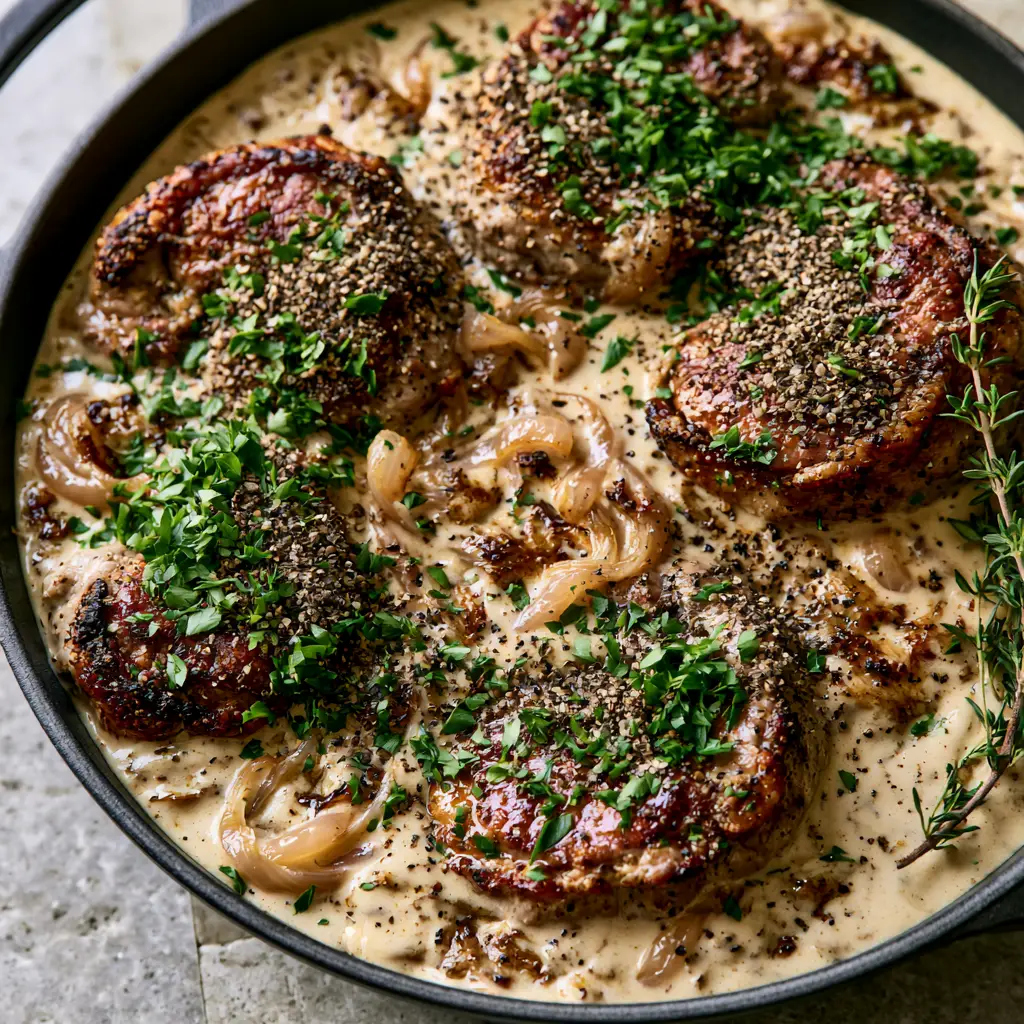
Nestle the pork medallions back into the bubbling sauce, ensuring they are partially submerged but the crusty tops remain visible. Allow them to warm through for 1-2 minutes. This allows the juices to mingle with the gravy.
Finish the dish with a generous scatter of finely minced bright green flat-leaf parsley and one final dusting of coarse black pepper. Garnish with a fresh thyme sprig on the side of the skillet for that professional, handheld-photo look.
Pro Tips for Skillet Excellence
- Don’t Move the Meat: Once the pork hits the hot oil, leave it alone. Moving it too early prevents the crust from forming and can cause the meat to tear.
- The “Nappe” Test: Your gravy is perfectly reduced when it reaches the “nappe” stage—it should coat the back of a spoon, and when you run your finger through it, the line should stay clean.
- Temper Your Cream: If you are worried about the cream curdling, make sure your heat is not too high when you add it. A gentle simmer is much better than a rolling boil.
- Resting is Key: Always let the pork rest before serving. This allows the fibers to relax and reabsorb the juices, ensuring every bite is glistening and moist.
The Best Pairings for Creamy Pork Medallions
Because this dish is rich and savory, it pairs beautifully with sides that offer a bit of acidity or a neutral base to soak up that incredible onion gravy.
For a refreshing contrast, serve this with a chilled cucumber onion tomato salad. The acidity of the tomatoes cuts through the heavy cream perfectly. If you prefer a starch, a scoop of creamy Hawaiian mac salad provides a playful, comforting side that complements the pork’s texture.
If you are looking for a beverage to round out the meal, a lemonade moscato wine spritzer offers a bright, effervescent finish that cleanses the palate between rich bites of gravy.
Preserving Your Leftovers
Storage: Store any remaining pork medallions with onion gravy in an airtight container in the refrigerator for up to 3 days. The sauce will thicken significantly when cold.
Reheating: To maintain the texture of the pork, reheat gently on the stovetop over low heat. Add a splash of milk or chicken broth to thin the gravy back to its original velvety consistency. Avoid the microwave if possible, as it can make the pork rubbery.
Freezing: While the pork freezes well, cream-based sauces can sometimes separate upon thawing. If you must freeze, do so for no more than 1 month, and whisk the sauce vigorously while reheating to bring the emulsion back together.
Frequently Asked Questions
Yes, but yellow onions are preferred for their higher sugar content, which results in better caramelization and a deeper flavor in the gravy.
Avoid boiling the sauce vigorously once the heavy cream is added. Simmer gently over medium-low heat and ensure your pan has been deglazed with stock first.
Pork tenderloin is the ideal cut because it is extremely lean and tender, allowing for quick high-heat searing without becoming tough.
For juicy results, aim for an internal temperature of 145°F (63°C), which will result in a slightly blushing pink center.
Your pan might not be hot enough, or the pork may have been too wet. Always pat the meat dry and wait for the oil to shimmer before adding the medallions.
The Master Recipe for Pork Medallions with Onion Gravy
Pork Medallions with Onion Gravy: The Ultimate Skillet Supper
Ingredients
Equipment
Method
- Pat the pork dry and slice into 1.5-inch medallions. Season heavily with salt and coarse cracked black pepper.
- Heat oil in a cast iron skillet over medium-high heat. Sear medallions for 3-4 minutes per side until a deep golden-brown crust forms. Remove and set aside.
- Add butter and onions to the pan. Sauté over medium heat for 8-10 minutes until translucent and soft.
- Add garlic and thyme, then deglaze with chicken stock, scraping up the browned bits (fond).
- Stir in heavy cream and simmer until the sauce is thick, velvety, and ivory-colored.
- Return pork to the skillet. Garnish with minced parsley, extra black pepper, and fresh thyme sprigs.
Notes
Don't crowd the pan; sear in batches if necessary.

Join the Flavorvale Community
We hope these pork medallions with onion gravy become a new staple in your home. The combination of simple techniques and high-quality ingredients creates a dish that truly exceeds the sum of its parts. If you enjoyed this recipe, please leave a comment below and share your results with us!
Don’t forget to follow us on Pinterest for more culinary inspiration and visual recipe guides. Sign up for our newsletter to receive the latest recipes directly in your inbox, from quick vegetarian dinners to decadent French crepes.