There is nothing quite like the sight of a stack of authentic French crepes catching the soft, natural morning sunlight from a side window. When done correctly, these delicate delights feature beautiful golden-brown mottled leopard spotting and lacy edges that shatter slightly upon the first bite. This recipe is designed to recreate that exact high-resolution, hyper-realistic culinary experience in your own kitchen.
Mastering the art of the crepe is a rite of passage for any home cook. We are moving beyond thick, rubbery pancakes and entering the realm of translucency. These French crepes are paper-thin, structurally sound enough to fold artfully, yet tender enough to melt away when topped with a pat of salted butter and amber maple syrup.
Whether you are hosting a sophisticated brunch or looking for a comforting weekend breakfast, this guide provides the forensic precision needed for success. Every measurement and technique is calibrated to ensure your ceramic plate holds a stack of ten perfect crepes, just as you’ve envisioned.
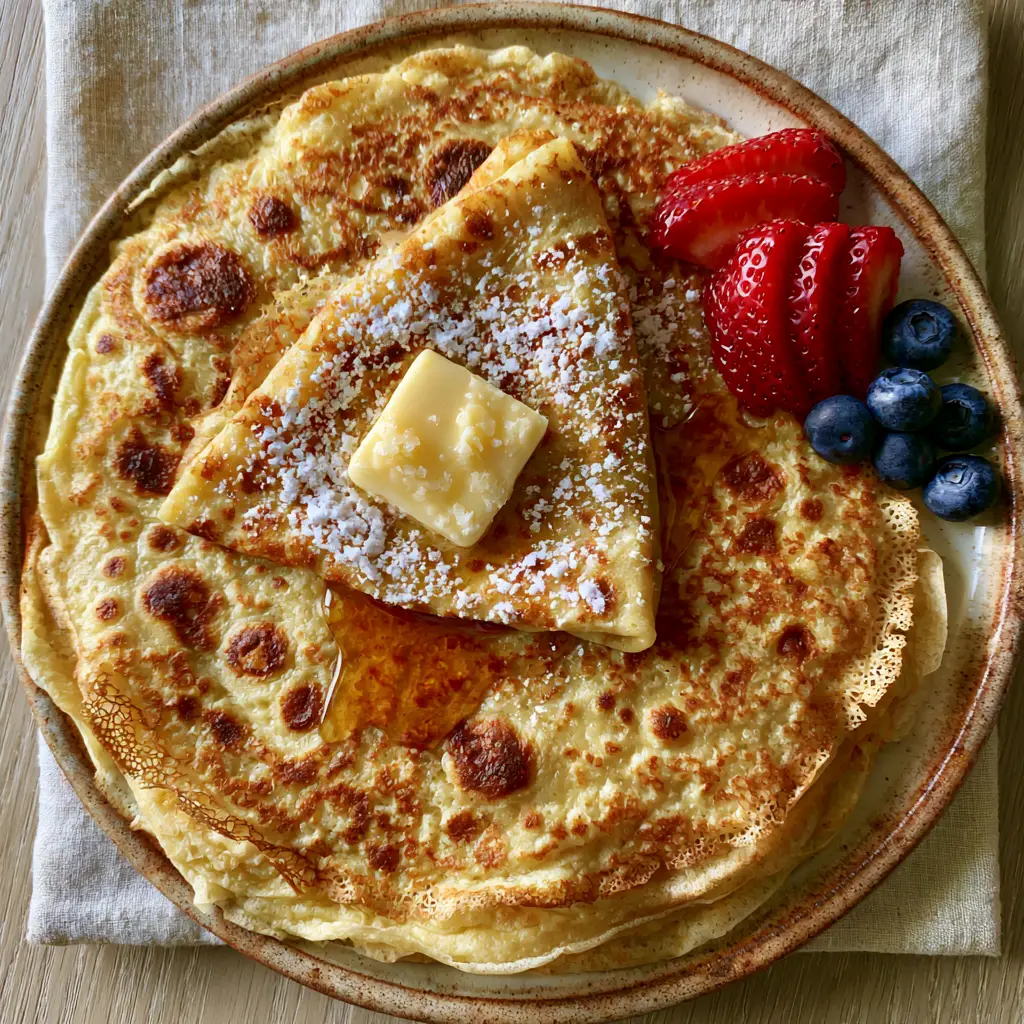
Why This Is the Only French Crepe Recipe You Need
- Visual Perfection: Achieve that signature “leopard spotting” and mottled golden-brown texture through precise heat management.
- Structural Integrity: These crepes are paper-thin but won’t tear, making them perfect for the artful folding seen in professional food photography.
- Dual-Texture Contrast: Learn the secret to achieving those crispy, lacy edges while keeping the center soft and buttery.
- Balanced Flavor: A hint of sugar for caramelization and a touch of salt to offset the sweetness of fresh strawberries and blueberries.
Essential Components for the Perfect Batter
To achieve the visual and textural results of authentic French crepes, every ingredient serves a specific scientific purpose. We use a combination of milk and water to ensure the batter is fluid enough to spread instantly across the pan.
All-Purpose Flour: 1.5 cups (190g). Flour provides the necessary gluten structure; however, we will rest the batter to ensure the crepes remain tender rather than chewy.
Large Eggs: 3 units. Eggs act as the binder and provide that rich, golden hue seen in the mottled leopard spots on the surface.
Whole Milk: 1 cup (240ml). Milk adds fat and protein, which aids in the Maillard reaction, giving us those beautiful brown highlights.
Water: 1/2 cup (120ml). Adding a bit of water thins the batter more effectively than milk alone, allowing for a “paper-thin” result that is almost translucent.
Unsalted Butter (Melted): 3 tbsp (42g). Incorporating fat directly into the batter prevents sticking and creates a silky mouthfeel.
Granulated Sugar: 2 tbsp (25g). While these are nearly savory, sugar is essential for the “leopard spotting” as it caramelizes upon contact with the hot pan.
Vanilla Extract: 1 tsp (5ml). This adds a floral aroma that pairs perfectly with a dusting of powdered sugar and fresh fruit.
Fine Sea Salt: 1/4 tsp (1.5g). Salt is a flavor enhancer that balances the amber maple syrup drizzle added at the end.
Tools for achieving Professional Results
To get those lacy edges, you need a shallow, non-stick skillet or a dedicated crepe pan. A 10-inch (25cm) pan is ideal for a standard-sized crepe that can be easily folded.
You will also need a high-speed blender or a fine-mesh whisk. A blender is preferred as it aerates the batter slightly and ensures there are zero flour clumps, which would ruin the “paper-thin” aesthetic. Finally, a thin offset spatula is your best friend for flipping without tearing the delicate edges.
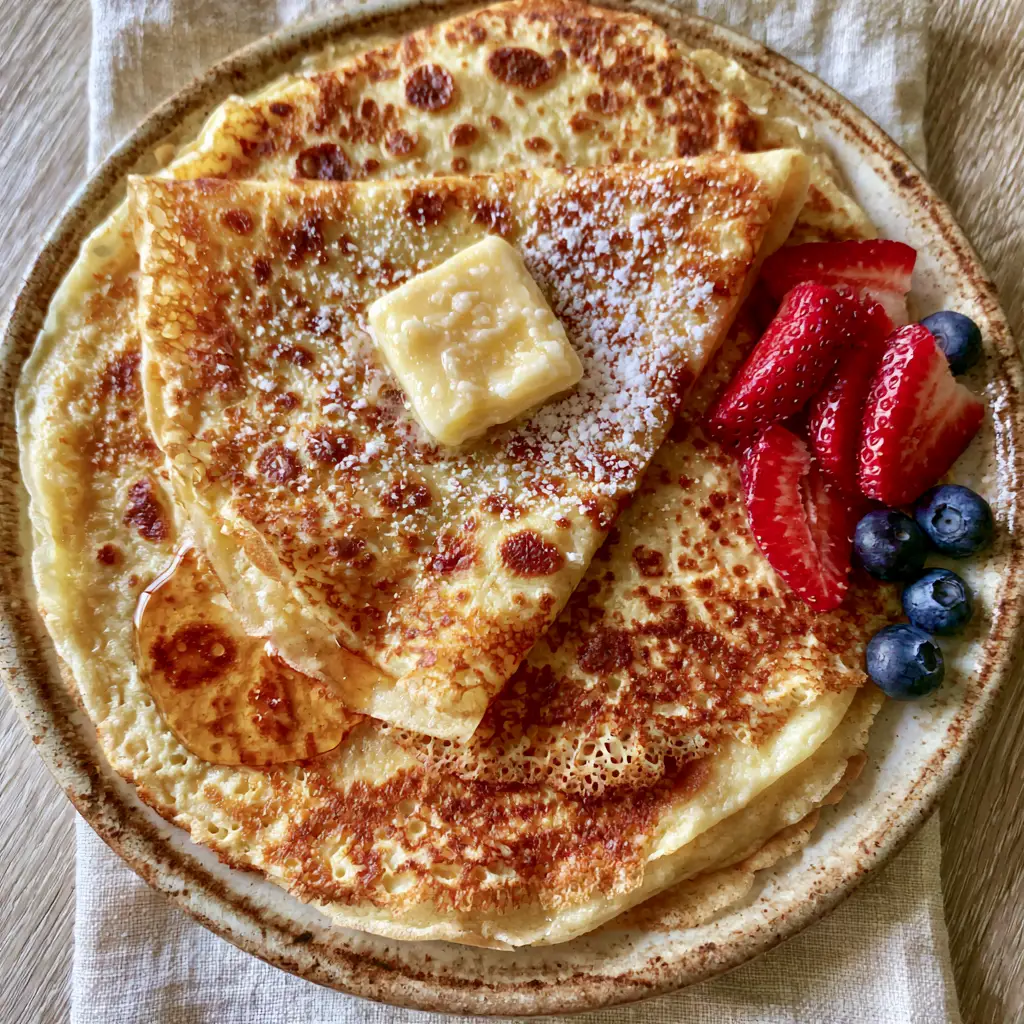
The Secret Step: Hydrating the Flour
Mixing for Total Homogeneity
Combine your milk, water, eggs, melted butter, vanilla, sugar, and salt in a blender. Sift the flour over the liquid ingredients to prevent clumping. Blend on high for 20-30 seconds until the mixture is completely smooth and resembles the consistency of heavy cream.
The Mandatory Resting Period
This is where most home cooks fail. You must rest your batter in the refrigerator for at least 30 minutes, or up to 24 hours. This allows the flour to fully hydrate and the gluten to relax, ensuring your French crepes are tender and not “bouncy” or rubbery.
Executing the Perfect Sear and Flip
Temperature Management for Leopard Spots
Heat your non-stick pan over medium heat. Do not use too much oil; instead, lightly brush the pan with a tiny amount of butter and wipe away the excess with a paper towel. You want a “dry” but seasoned surface to achieve mottled spots rather than deep-fried bubbles.
The Swirl Technique
Lift the pan off the heat and pour about 1/4 cup (60ml) of batter into the center. Immediately tilt and rotate your wrist to swirl the batter toward the edges. If the batter is thin enough, it should reach the edges in a perfect circle within 3 seconds.
Watching the Sensory Cues
Cook for about 60-90 seconds. Look for the “lacy edges”—they will begin to brown and slightly lift away from the pan. The surface will go from shiny/wet to matte. Slide your spatula under the edge; if the bottom shows golden-brown leopard spots, it is time to flip.
The Final Kiss of Heat
Flip the crepe and cook the second side for only 20-30 seconds. The second side will never be as pretty as the first—this is normal! This side just needs to set. Slide the crepe onto a plate and cover with a clean linen texture towel to keep it warm while you finish the stack of ten.
Expert Tips for Success
- The First Crepe Rule: The first crepe is almost always a “throwaway.” Use it to calibrate your pan temperature and grease levels.
- Consistency Check: If the batter thickens too much while resting, whisk in a tablespoon of water before cooking. It should pour like melted ice cream.
- Avoid Over-Greasing: Too much butter in the pan creates a “fried” texture. For the authentic look, you want a matte finish with distinct spots.
- Stacking Strategy: Stack the crepes directly on top of each other. The steam keeps them pliable and prevents the lacy edges from becoming too brittle before serving.
Creative Pairings and Serving Suggestions
While a stack of ten French crepes is a meal on its own, they shine as part of a larger spread. If you are looking for a balanced breakfast, consider serving these alongside some creamy spinach and eggs for a savory contrast.
For a lighter brunch, these crepes pair beautifully with a crisp cucumber onion tomato salad. The acidity of the salad cuts through the richness of the melted salted butter and maple syrup.
If you enjoy fruit-forward bakes like raspberry lemon ricotta muffins, you will love the combination of fresh strawberries and blueberries used in this presentation. To drink, a lemonade moscato wine spritzer adds the perfect bubbly touch to a morning celebration.
Storing and Reheating Your Crepes
French crepes store remarkably well. Place a sheet of parchment paper between each crepe to prevent sticking, then wrap the stack tightly in plastic wrap. They will stay fresh in the refrigerator for up to 3 days.
To reheat, place a single crepe in a dry skillet over medium-low heat for 30 seconds per side. This restores the lacy edges better than a microwave, which tends to make them soft and limp.
Frequently Asked Questions
Authentic French crepes should have very thin, lacy, slightly crispy edges, while the center remains soft, buttery, and flexible enough to fold without breaking.
Yes! You can make the batter up to 24 hours in advance. Keep it covered in the refrigerator. In fact, a longer rest often results in an even better flavor and texture.
Leopard spots come from the right pan temperature (medium heat) and the sugar in the batter. Avoid using too much grease in the pan; a lightly seasoned, ‘dry’ non-stick surface is best.
A dedicated 10-inch carbon steel or non-stick crepe pan with low sides is ideal for easy flipping. However, any high-quality non-stick skillet will work if the sides aren’t too steep.
Rubbery crepes are usually caused by over-mixing or failing to rest the batter. Resting for at least 30 minutes allows the gluten to relax, ensuring a tender, melt-in-your-mouth texture.
The Signature French Crepe Recipe Card

French crepes: The Ultimate Recipe for Authentic, Paper-Thin Results
Ingredients
Equipment
Method
- Place milk, water, eggs, melted butter, vanilla, sugar, and salt in a blender. Add flour and blend on high for 30 seconds until perfectly smooth.
- Transfer batter to a container and refrigerate for at least 30 minutes. This hydrates the flour and ensures a paper-thin, non-rubbery texture.
- Lightly grease a 10-inch skillet with butter and wipe away excess. Heat over medium heat until a drop of water sizzles.
- Pour 1/4 cup of batter into the center and immediately swirl the pan to coat the bottom thinly. Cook for 60-90 seconds until edges are lacy and golden spots appear on the bottom.
- Carefully flip the crepe and cook the other side for 20-30 seconds. Repeat until you have a stack of ten.
Notes
If the batter is too thick after resting, whisk in 1 tbsp of water at a time until it reaches the consistency of heavy cream.
Closing & Call to Action
There is a unique satisfaction in flipping a paper-thin crepe and seeing those perfect golden spots. This recipe for French crepes brings the elegance of a Parisian bistro directly to your oak wood table. The combination of melting salted butter, fine powdered sugar, and vibrant berries creates a sensory experience that is as beautiful to look at as it is to eat.
If you enjoyed this recipe, please leave a comment below and tell us your favorite filling! Don’t forget to share your creations on Pinterest and tag us. Happy cooking!