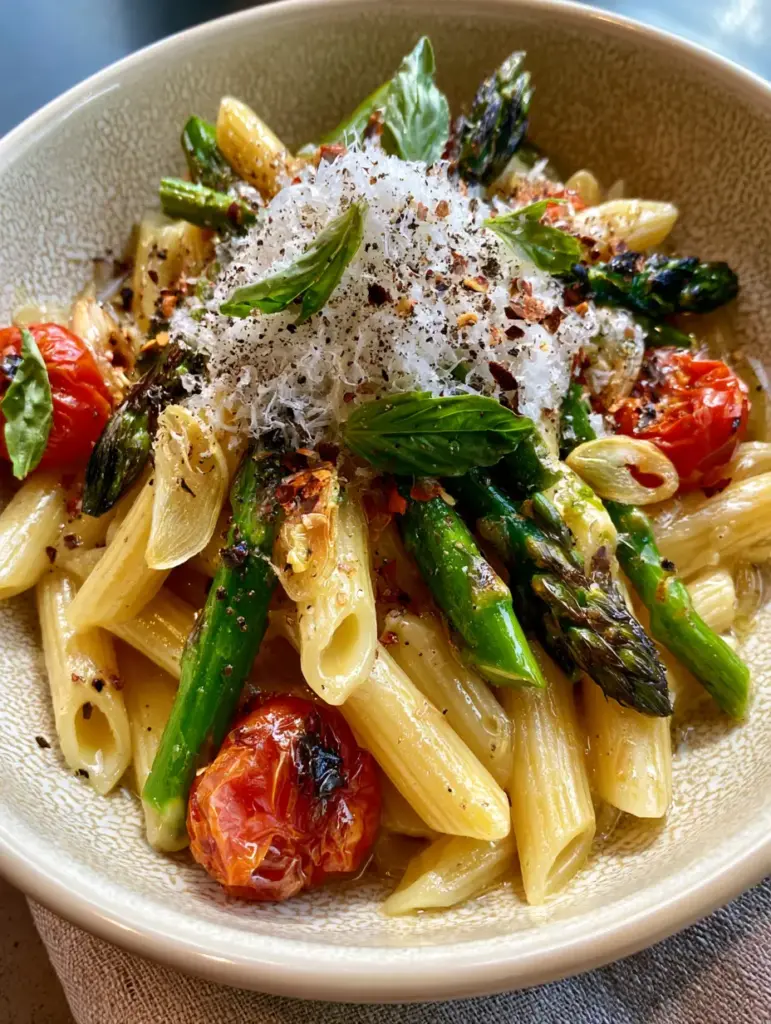
Pasta Primavera is often misunderstood as a bland medley of steamed vegetables, but this version reclaims the classic with high-heat techniques and a shimmering, translucent lemon-garlic emulsion. Imagine a shallow, textured ceramic bowl filled with glossy penne pasta, each tube perfectly al dente and coated in a sauce that catches the light like liquid gold. This recipe isn’t just about eating your greens; it’s about the contrast between caramelized, wrinkled tomato skins and the snap of bright green asparagus with deeply charred tips.
The visual appeal of this Pasta Primavera is undeniable, featuring a mountain of fluffy, micro-planed parmesan and the aromatic pop of fresh torn Thai basil. Every forkful delivers a balance of citrus brightness, the warmth of toasted garlic slivers, and the subtle heat of crushed red pepper flakes. Whether you are looking for a vibrant weeknight meal or a sophisticated weekend dinner, this dish brings the professional aesthetic of high-end food photography directly to your kitchen table.
Why This Zesty Lemon-Garlic Pasta Primavera Works
- Textural Contrast: We move beyond steaming to achieve “charred” and “blistered” textures that provide a smoky depth to the fresh produce.
- The Emulsion Secret: By using starchy pasta water and cold fat, we create a shimmering glaze that clings to the penne rather than pooling at the bottom of the bowl.
- Symphony of Aromatics: The combination of translucent toasted garlic slivers and fresh lemon zest strips creates layers of flavor that hit both the front and back of the palate.
- Visual Accuracy: This recipe is designed to look exactly like a gourmet smartphone capture—vibrant, glossy, and rustic yet refined.
If you are exploring more 30-minute vegetarian meals, this recipe will quickly become a staple in your rotation. It emphasizes fresh, seasonal ingredients while maintaining a level of culinary sophistication usually reserved for Italian bistros.
The Essential Pantry and Produce List for Vibrancy
Penne Rigate (450g / 1 lb): The ridges (rigate) are essential for catching the shimmering lemon-garlic glaze, ensuring no flavor is left behind. We cook this strictly al dente to maintain a firm, bouncy structure against the soft blistered tomatoes.
Fresh Asparagus (450g / 1 lb): Look for medium-thick spears; thin ones turn to mush before they can develop those signature charred tips. We will trim them into bite-sized lengths for easy eating.
Heirloom Cherry Tomatoes (280g / 1 pint): These are the stars of the “blistered” visual. As they hit the hot oil, their skins wrinkle and caramelize, releasing a sweet, concentrated juice that fortifies the sauce.
Fresh Garlic (6-8 large cloves): Instead of mincing, we create thin, translucent toasted garlic slivers. This technique prevents the garlic from burning and provides a nutty, mellow crunch.
Extra Virgin Olive Oil (60ml / 1/4 cup): This is a foundational “invisible” ingredient. High-quality oil is necessary for searing the vegetables and serves as the base of our translucent emulsion.
Fresh Lemon (2 large): We use both the juice for acidity and long, elegant strips of lemon zest for a concentrated citrus aroma. This provides the “shimmering” highlight described in our visual blueprint.
Micro-planed Parmesan Cheese (1/2 cup / 50g): Forget the shaker; we want a “generous mountain” of fluffy cheese. Using a micro-plane creates a snow-like texture that melts instantly into the hot pasta.
Thai Basil (1/4 cup / 10g): While traditional basil is common, Thai basil adds a spicy, anise-like note that pairs beautifully with the crushed red pepper and lemon. Torn by hand, it preserves the volatile oils.
Crushed Red Pepper & Cracked Black Pepper: These provide the finishing visual “sprinkle.” The coarse black pepper provides a sharp bite, while the red flakes add a gentle, lingering heat.
Fine Sea Salt: Essential for the pasta water. The water should taste like the sea to properly season the penne from the inside out.
Kitchen Tools for Professional-Level Char and Zest
To achieve the specific “high-end food photography” look, your tools matter. A wide, heavy-bottomed stainless steel or cast iron skillet is non-negotiable for blistering the tomatoes and charring the asparagus tips simultaneously. The heat retention of these pans ensures the vegetables sear rather than steam.
You will also need a micro-plane grater to achieve that “fluffy mountain” of parmesan. A standard box grater will produce shreds that are too heavy and won’t mimic the delicate texture seen in the Midjourney prompt. Lastly, use a sharp vegetable peeler to create the long, thin lemon zest strips that add a professional garnish to the final plate.
Master the Art of the Shimmering Lemon-Garlic Emulsion
1. Precision Pasta Boiling
Bring a large pot of water to a rolling boil and add 2 tablespoons (30g) of sea salt. Add 1 lb (450g) of penne. Cook for exactly 2 minutes less than the package directions for al dente. This allows the pasta to finish cooking in the sauce, absorbing the lemon and garlic flavors without becoming soft.
2. The Garlic Sliver Technique
While the pasta boils, peel your garlic cloves and use a very sharp knife to cut them into paper-thin, translucent slices. In your wide skillet, heat 1/4 cup (60ml) of olive oil over medium-low heat. Add the garlic slivers and cook until they are a pale golden brown. Remove them with a slotted spoon and set aside; they will provide that toasted crunch at the end.
3. Blistering and Charring the Produce
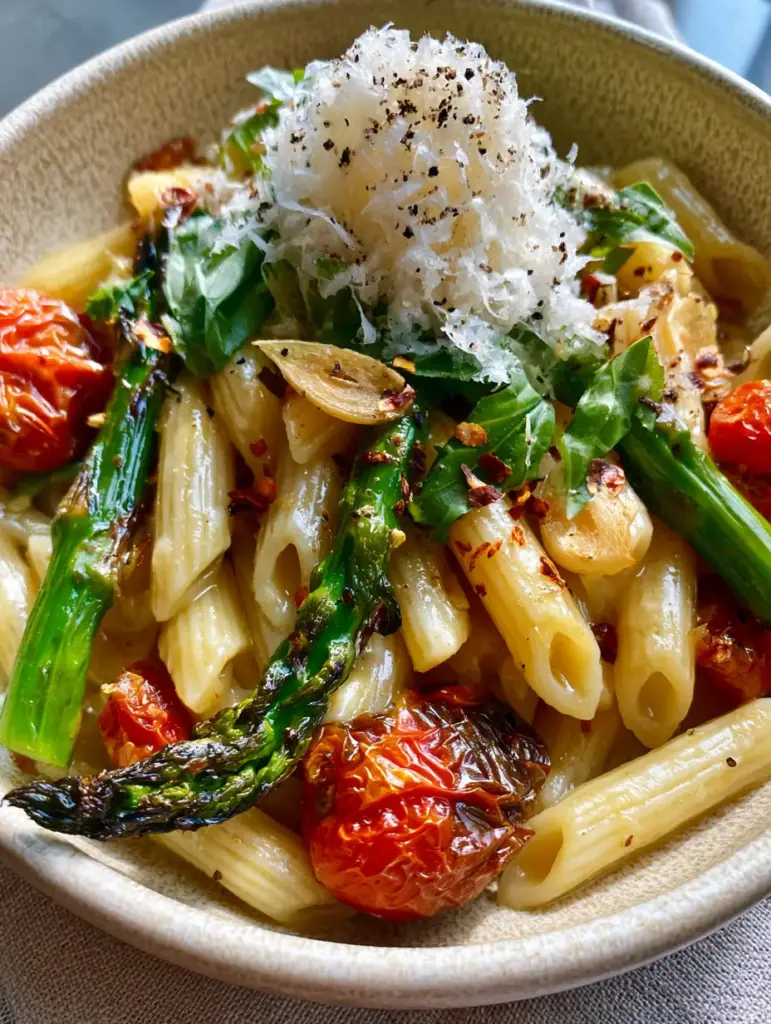
Turn the heat under the skillet to medium-high. Once the oil is shimmering and near its smoke point, toss in the cherry tomatoes and asparagus spears. Do not crowd the pan. Let them sit undisturbed for 2-3 minutes until you hear the tomatoes “pop” and see the asparagus tips turning dark and charred. Shake the pan occasionally until the tomato skins are wrinkled and caramelized.
4. Creating the Translucent Glaze
Before draining the pasta, reserve 1 cup (240ml) of the starchy pasta water. This is your “liquid gold.” Reduce the skillet heat to medium, add the lemon juice and half of the reserved pasta water. Whisk vigorously as the liquid bubbles; the starch in the water will emulsify with the olive oil to create a shimmering, translucent glaze.
5. The Final Toss and Garnish
Add the under-cooked penne directly into the shimmering sauce. Toss continuously for 60-90 seconds, adding more pasta water if the sauce becomes too thick. The pasta should look glossy and wet, not dry. Turn off the heat and fold in the lemon zest strips and half of the torn Thai basil. The residual heat will release their aromas without wilting them into mush.
Chef-Tested Tips for the Perfect Penne Texture
- The “Starch Factor”: Never rinse your pasta. The surface starch is what allows the lemon-garlic emulsion to cling to the penne, creating that professional “glossy” finish.
- High Heat is Key: If your tomatoes aren’t blistering, your pan isn’t hot enough. You want the skins to caramelize quickly while the insides remain juicy and whole.
- Cheese Timing: Wait until the pasta has rested for 30 seconds before adding the parmesan mountain. If the pasta is screaming hot, the cheese will clump; if it’s just right, the cheese will sit fluffily on top.
- Flavor Balancing: If the dish feels “flat,” add a tiny pinch of extra salt or a squeeze more lemon. Acidity is the engine of Pasta Primavera.
What to Serve Alongside Your Garden-Fresh Pasta
This Pasta Primavera is a complete meal on its own, but it pairs beautifully with light, crisp sides. For a refreshing contrast to the warm pasta, consider a cucumber onion tomato salad dressed in a simple vinaigrette. The crunch of the cucumbers complements the tender-crisp asparagus perfectly.
If you are hosting a summer gathering, these grilled veggie skewers make an excellent appetizer that echoes the charred notes of the main dish. To drink, nothing beats a lemonade moscato wine spritzer, which mirrors the citrus profile of the lemon-garlic glaze and keeps the meal feeling light and celebratory.
Frequently Asked Questions about Pasta Primavera
For this specific recipe, fresh is best. Frozen vegetables contain too much moisture to achieve the ‘charred’ and ‘blistered’ textures that define the dish’s flavor and appearance.
Use a very sharp chef’s knife or a handheld mandoline slicer. Thin slivers ensure the garlic toasts evenly into translucent, golden chips rather than burning.
The secret is reserving starchy pasta water. When whisked with olive oil and lemon juice, it creates a shimmering emulsion that coats the pasta perfectly without drying out.
Al dente translates to ‘to the tooth.’ The pasta should be firm when bitten, with a tiny pale core in the center, ensuring it doesn’t turn mushy when tossed in the sauce.
Thai basil offers a unique peppery, anise-like flavor that stands up better to the lemon and red pepper flakes, adding a professional, layered aromatic profile to the dish.
The Ultimate Pasta Primavera Recipe Card
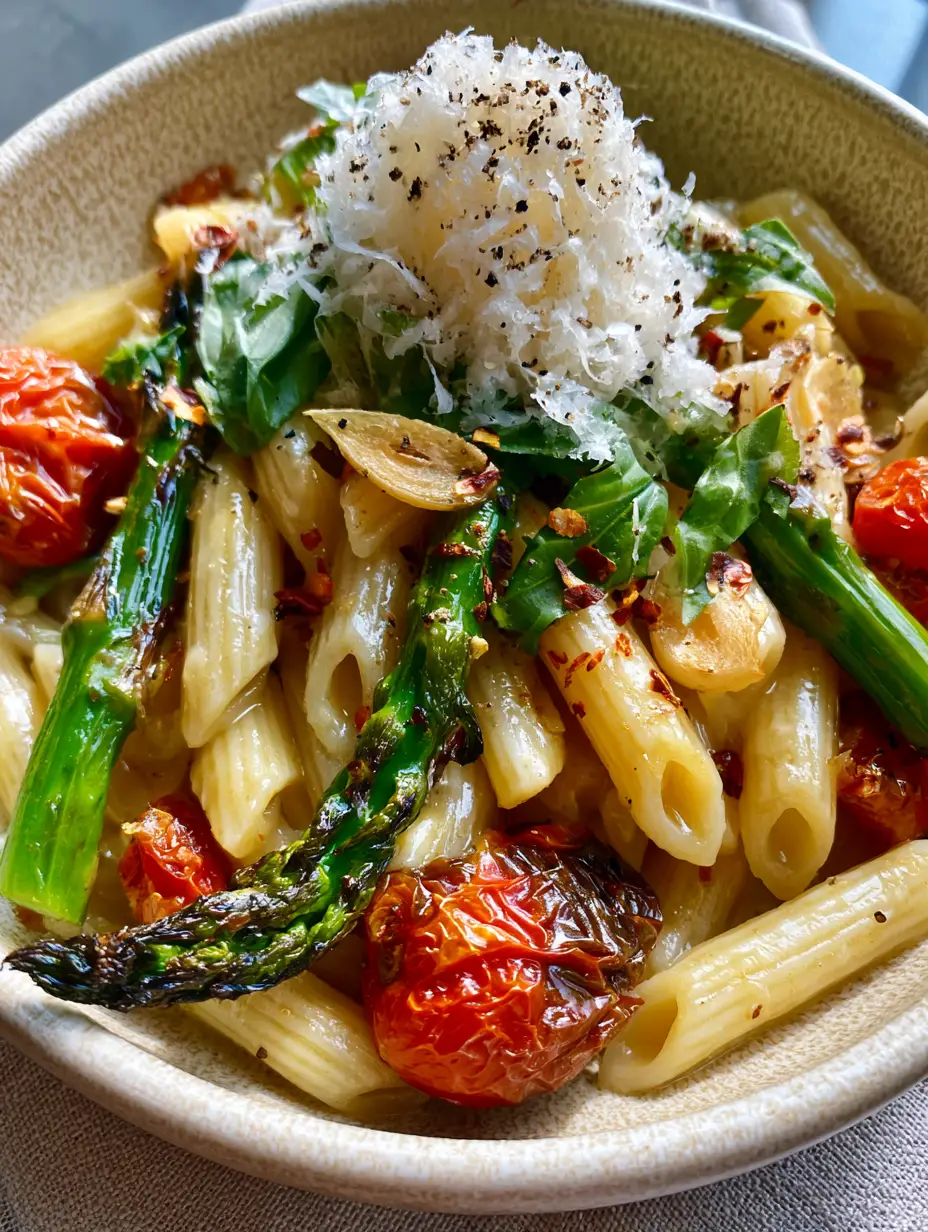
Pasta Primavera with Blistered Tomatoes and Charred Asparagus
Ingredients
Equipment
Method
- Boil penne in salted water for 2 minutes less than package instructions. Reserve 1 cup (240ml) of pasta water before draining.
- Cut garlic into translucent thin slices. Sauté in olive oil over low heat until pale gold. Remove garlic and set aside.
- Increase heat to medium-high. Add tomatoes and asparagus. Cook undisturbed for 3 minutes until tomatoes blister and asparagus tips char.
- Add lemon juice and 1/2 cup pasta water to the pan. Whisk to create a shimmering emulsion with the oil.
- Add pasta to the skillet. Toss for 1 minute until glossy. Fold in lemon zest, toasted garlic, and torn Thai basil.
- Top with a mountain of micro-planed parmesan, cracked black pepper, and red pepper flakes.
Notes
Use Thai basil for a unique, peppery aromatic profile that sets this dish apart.
Bring the Flavors of Spring to Your Table
There is something deeply satisfying about a bowl of Pasta Primavera that hits every sensory note—the sight of vibrant greens and reds, the smell of toasted garlic and lemon, and the perfect bite of al dente penne. This dish proves that with the right technique, simple garden ingredients can be transformed into a high-end culinary experience.
We invite you to share your creations! Did your tomatoes blister perfectly? Did the lemon glaze shimmer? Leave a comment below and let us know your thoughts. Don’t forget to save this recipe to your “Healthy Dinners” board on Pinterest so you can find it whenever the craving for fresh, zesty pasta hits.